
 Author:
As the sun sets, most gardens fade into shadow. A white moon garden does the opposite: pale petals and silvery leaves catch the last light of dusk and the moon’s glow, seeming to float in the darkness. Many of these flowers also release their strongest fragrance at night, turning an ordinary patio into a calm, magical retreat after a long day.
This guide covers six reliable plants for a moonlit border and practical tips for designing one. Explore the full range at KVITER Seeds and buy heirloom ornamentals that will become an excellent part of your white moon garden.
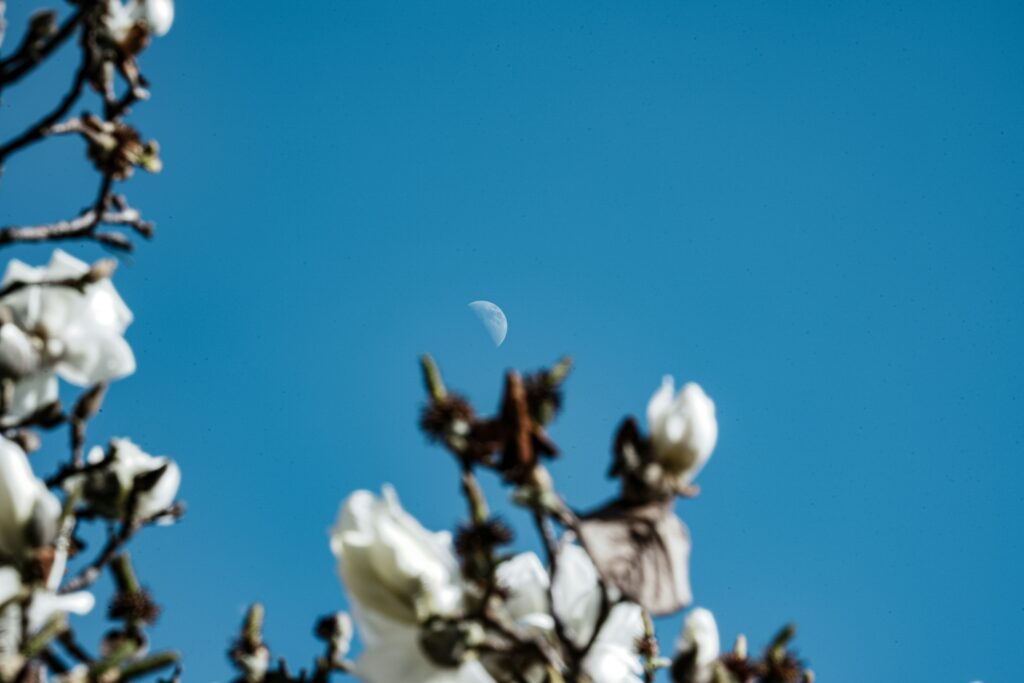
What is White Moon Garden?
A white moon garden, or moonlight garden, is a planting designed to be enjoyed in the evening and at night. It relies on white, cream, and pale yellow flowers, together with silver or variegated foliage, because light colors reflect even faint moonlight, while reds, blues, and purples disappear after dark.
The main features of a moon garden:
- Pale blooms that glow at dusk and by moonlight.
- Silver and gray foliage that reflects light and adds texture.
- Night fragrance from flowers pollinated by moths, which open or release scent in the evening.
- A place to sit on a patio, porch, bedroom window, or path, where you can enjoy the garden after work.
- Use soft lighting, such as solar lanterns or string lights, sparingly so the plants remain the stars.
Moon gardens also support night pollinators, including sphinx moths, which visit long, tubular, fragrant flowers.
Sweet Alyssum
White sweet alyssum (Lobularia maritima) creates a frothy, glowing carpet along paths and bed edges, almost like a ribbon of moonlight on the ground. Its tiny, honey-scented flowers bloom from spring to frost and attract hoverflies and small native bees.
Plants stay 4–8 inches (10–20 cm) tall and spread 8–12 inches (20–30 cm). Scatter seeds on the soil surface without covering them, as they need light to germinate. At 60°F–70°F (16°F–21°C), seedlings appear in 5–10 days. Sow outdoors in early spring or start indoors, 6 weeks before the last frost. If flowering slows in summer heat above 85°F (29°C), trim plants back by one third to bring a fresh flush of bloom in autumn.
Cosmos
White cosmos varieties, such as the classic ‘Purity’, bring height and movement to a moon garden. Their large, silky, daisy-like blooms, 3–4 inches (7.5–10 cm) across, sway on airy stems above feathery foliage and shine clearly against the evening sky.
Plants reach 36–60 inches (90–150 cm), making them ideal for the back of a border. Sow seeds directly after the last frost, 1/4 inch (0.6 cm) deep, in soil around 65°F–75°F (18°C–24°C). Seedlings usually emerge in 5–10 days. Space plants 12–18 inches (30–45 cm) apart in full sun. Cosmos thrives in poor, dry soil, and too much fertilizer only produces floppy stems. Regular cutting for vases encourages even more flowers until frost.
Moonflower
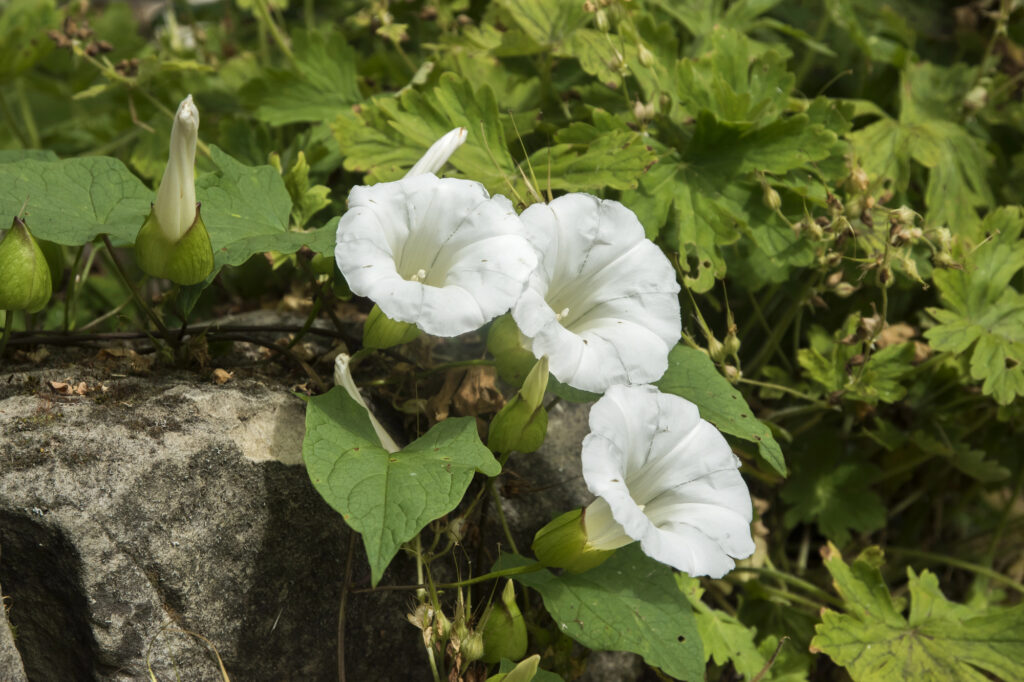
Moonflower (Ipomoea alba) is the undisputed star of any night garden. Its pure white, saucer-shaped blooms, 5–6 inches (13–15 cm) across, unfurl at dusk in just a minute or two, release a sweet, lemony fragrance, and close again the next morning. Watching them open is a summer evening ritual that delights children and adults alike. Moonflower and other evening bloomers are easy to find among flower seeds to buy.
This fast-growing vine climbs 120–180 inches (3–4.5 m) in one season, so give it a sturdy trellis, arbor, or fence near a seating area. The hard seed coat needs preparation: nick each seed with a nail file, then soak it overnight in warm water. Sow 1/2 inch (1.3 cm) deep after the last frost, once soil reaches 65°F–70°F (18°C–21°C). Moonflower seeds germinate in 5–10 days. Plants flower best in full sun and average soil. In cool regions, start seeds indoors 4–6 weeks early in biodegradable pots to gain extra bloom time. All parts of the plant are toxic if eaten.
Sweet Peas
White and cream sweet peas (Lathyrus odoratus) add romance and one of the finest fragrances in the garden. Their ruffled blooms glow softly at twilight, and heirloom varieties are especially fragrant.
Climbing types grow 48–96 inches (1.2–2.4 m) tall on netting or a teepee of canes. Sweet peas love cool weather: sow them outdoors in early spring as soon as the soil can be worked, or in autumn in mild climates. Soak seeds for 8–12 hours, then plant 1 inch (2.5 cm) deep and 4–6 inches (10–15 cm) apart. They germinate in 10–14 days at 55°F–65°F (13°C–18°C). Pick flowers every few days, because plants stop blooming once they set seed pods, and keep roots cool with a layer of mulch. Unlike culinary peas, sweet peas are not edible.
Snapdragons
White snapdragons (Antirrhinum majus) add vertical spires that read beautifully in low light. Their densely packed, dragon-shaped flowers open from the bottom of the stem upward, giving a long display in spring and again in autumn.
Varieties range from 8 inches (20 cm) dwarf types for edging to 36 inches (90 cm) tall cutting types for the middle of the border. Start seeds indoors 8–10 weeks before the last frost, pressing them onto the surface because they need light. Keep them at 65°F–70°F (18°C–21°C). Snapdragons usually germinate in about 7–14 days. They tolerate light frost and perform best in cool weather. Pinch young plants once for bushier growth, deadhead spent spikes, and cut them back after the first bloom for a second flush when temperatures fall below 80°F (27°C).
Lamb’s Ears
Lamb’s ears (Stachys byzantina) are grown for their soft, woolly, silver-gray leaves, which shimmer in moonlight and invite touching, making them a favorite in children’s and sensory gardens. The foliage provides a calm, cool backdrop that makes white flowers look even brighter.
Plants form spreading mats 6–8 inches (15–20 cm) tall and 12–24 inches (30–60 cm) wide, with flower spikes up to 18 inches (45 cm). Sow seeds 1/4 inch (0.6 cm) deep at 65°F–75°F (18°C–24°C); germination takes 10–30 days. Lamb’s ears are hardy perennials that survive winters down to about -30°F (-34°C). They need full sun and very well-drained soil, as wet, heavy ground causes leaves to rot. Many gardeners remove flower spikes to keep the foliage neat.
Tips for Garden Creation
Plan a successful moon garden around the hours you’ll enjoy it. These steps help create a glowing, fragrant evening retreat:
- Choose the right spot. Place the garden where it is seen at night, near a patio, terrace, porch, or bedroom window, and where moonlight reaches it without heavy tree shade.
- Layer heights. Put moonflower and sweet peas on trellises at the back, cosmos and snapdragons in the middle, and sweet alyssum and lamb’s ears at the front.
- Plant in drifts. Groups of 5–7 plants of each kind create larger pools of light than scattered single plants.
- Add silver foliage. Combine white blooms with lamb’s ears, dusty miller, or artemisia for contrast and texture.
- Plan for fragrance. Place scented flowers within 36–72 inches (90–180 cm) of seating so you can enjoy the perfume.
- Use pale hardscape. Light gravel paths, white stones, and pale containers extend the glow.
- Light gently. Choose warm, low solar lights, and keep them few so they don’t overpower the moonlight.
A white moon garden turns warm summer evenings into calm, fragrant moments of rest. Trusty vendors like KVITER offer heirloom flower seeds with a high germination rate. This makes it simple to grow a garden of purposeful beauty in harmony with nature.




Leave a Reply