
 Author:
Parents trust schools, summer camps, sports clubs, and other youth programs to provide a reasonably safe environment for their children. Whether a child is attending classes, participating in sports, or joining an after-school activity, families expect responsible supervision and appropriate safety measures.
Unfortunately, accidents and preventable injuries can still occur. A child might be injured because of unsafe playground equipment, inadequate supervision, poorly maintained facilities, or an incident that staff could reasonably have prevented. When something goes wrong, parents often have questions about responsibility, medical expenses, and whether the organization followed its own safety procedures.
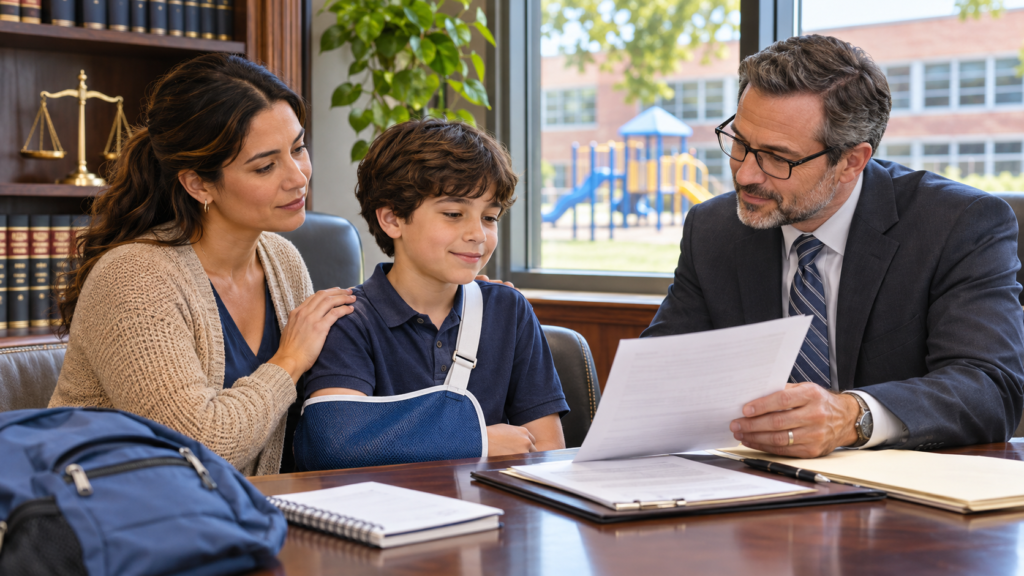
Law firms handling school and youth program injury cases can help families understand their legal rights, examine the circumstances, and determine whether a claim is appropriate. Their involvement can be particularly valuable when several individuals or organizations share responsibility for a child’s care.
How Lawyers Evaluate School and Youth Program Injury Cases
The first step in handling a school-related injury case is understanding exactly what happened. Attorneys generally begin by reviewing the incident, identifying those involved, and examining whether reasonable precautions were taken.
Not every injury creates grounds for legal action. Children sometimes get hurt even when teachers, coaches, and supervisors act responsibly. The legal question is whether someone failed to exercise the care required under the circumstances and whether that failure contributed to the injury.
Different law firms handle different categories of institutional claims. For example, Injury Lawyer Team works with civil matters involving schools and youth organizations, although its practice focuses on a particular category of institutional harm. Families should confirm that any firm they contact handles their specific type of case.
During an initial consultation, an attorney may ask about the child’s injuries, the location of the incident, previous safety concerns, and the school’s response. These details help determine whether further investigation is worthwhile.
Investigating Negligent Supervision and Unsafe Conditions
Schools and youth programs are expected to take reasonable steps to protect children while they are under their supervision. The precise legal duties depend on the circumstances, applicable laws, and the relationship between the organization and the child.
For instance, a sports program may need appropriate supervision during training, while a summer camp may be responsible for maintaining safe activity areas and providing properly trained staff. A school may also need to address known hazards, such as damaged equipment or unsafe walkways.
Attorneys examine whether the organization had suitable safety procedures and whether employees followed them. They may review incident reports, maintenance records, staffing arrangements, and previous complaints about similar hazards.
A central issue is whether the organization knew, or reasonably should have known, about a dangerous situation and failed to respond appropriately. Establishing this connection can help determine whether an injury resulted from preventable negligence rather than an unavoidable accident.
Reviewing School Policies and Staff Responsibilities
Written safety policies can provide important information about how schools and youth programs are supposed to operate. These documents may explain staff responsibilities, supervision requirements, emergency procedures, and methods for reporting incidents.
Parents can learn more about policies for screening staff, supervising adults, and responding to complaints when evaluating the safeguards used by organizations responsible for children.
However, having written policies does not necessarily mean an organization follows them consistently. An attorney may examine whether employees received appropriate training, understood their responsibilities, and took reasonable action when safety concerns arose.
Consider a situation involving playground equipment that had previously been reported as damaged. If the school received repeated complaints but failed to inspect or repair the equipment, those records could become relevant to an injury claim.
The investigation may also consider whether the organization documented earlier incidents and introduced corrective measures. This information helps establish the circumstances surrounding the injury.
Gathering Evidence That Can Support an Injury Claim
Evidence plays an important role in determining what happened and whether a school or youth organization may be legally responsible.
Attorneys may collect medical records, photographs, witness statements, maintenance documents, incident reports, and other materials related to the event. Depending on the circumstances, available security footage or communication between school administrators and parents may also be relevant.
Medical records are particularly important because they help document the nature of the child’s injuries, treatment requirements, and possible long-term effects.
For example, a child injured during an organized sports activity might require emergency treatment, rehabilitation, or follow-up appointments. Medical documentation can establish the treatment received and help assess ongoing care needs.
Families should preserve relevant information as early as possible. Keeping copies of medical bills, written communications, photographs, and school reports can make the legal review more efficient.
An attorney may also help request records that families cannot easily obtain themselves, using the legal procedures available in the relevant jurisdiction.
Helping Parents Respond After a School Incident
The period immediately following a child’s injury can be stressful. Parents may be focused on medical treatment while also trying to understand what happened and how the school intends to respond.
The child’s health and immediate safety should come first. Families should obtain appropriate medical attention and follow the recommendations of qualified healthcare professionals.
Parents should also report the incident to the school or program and request a written record where appropriate. Recording dates, locations, staff names, and relevant conversations can help establish an accurate timeline.
Regular conversations about school safety may also help children feel comfortable sharing concerns about their surroundings and activities.
When discussing an incident with a child, parents should use calm, age-appropriate questions and avoid pressuring them to provide answers. Listening carefully can help families understand the child’s experience without creating additional distress.
If the circumstances raise legal questions, an attorney can explain what information should be preserved and whether further action is necessary.
Determining Who May Be Legally Responsible
Responsibility for a child’s injury is not always limited to one person or organization. Depending on the circumstances, a school, camp operator, sports organization, property owner, or outside service provider may have played a role.
For example, an injury involving defective playground equipment might raise questions about maintenance practices, installation, and the responsibilities of the organization managing the facility.
Similarly, an accident during a school-sponsored activity may require examining who organized the event, who supervised the children, and which organization controlled the location.
Lawyers evaluate these relationships to identify potentially responsible parties. They also examine whether there is sufficient evidence to establish a legal duty, a failure to meet that duty, and a connection between that failure and the injury.
Public schools may be subject to different legal rules from private institutions. Government immunity provisions, special notice requirements, and shorter filing deadlines can affect whether and how families pursue claims. Because these requirements vary by state, obtaining jurisdiction-specific legal advice early can be important.
Understanding Compensation and the Legal Process
When a school or youth program is legally responsible for an injury, compensation may be available for certain losses.
Depending on the applicable law and circumstances, recoverable damages may include medical expenses, rehabilitation costs, future treatment needs, and other losses associated with the injury. In some cases, compensation may also account for pain, suffering, or lasting limitations.
Attorneys examine medical evidence and financial records to assess potential damages. They may consult qualified professionals when an injury involves significant ongoing treatment or uncertain long-term effects.
Not every case proceeds to court. Some claims are resolved through negotiation, while others require formal litigation when the parties disagree about responsibility or compensation.
A lawyer should explain the available options, potential costs, and likely challenges without guaranteeing a particular outcome.
Choosing the Right Lawyer for a School Injury Case
Selecting legal representation requires more than finding a firm that advertises experience with injury claims. Families should look for attorneys who understand the specific legal issues involving children, educational institutions, and youth organizations.
During consultations, parents can ask whether the firm has handled comparable cases, which attorney will manage the matter, and how the investigation will proceed. It is also reasonable to discuss legal fees, communication practices, filing deadlines, and the documents needed for an initial assessment.
The right attorney should explain complicated legal questions clearly and give families realistic expectations about the process. Parents should feel comfortable asking questions and making informed decisions before agreeing to representation.
Conclusion
When a child is injured at school or during a youth program, families may face medical concerns, unexpected expenses, and difficult questions about how the incident occurred.
Law firms can help by examining evidence, reviewing safety procedures, identifying potentially responsible parties, and explaining the legal options available under applicable law.
Although not every accident leads to a valid claim, understanding the circumstances and receiving appropriate legal advice can help families make informed decisions. The priority should always be the child’s well-being, followed by a careful assessment of whether further action is justified.




Leave a Reply