
 Author:
 Every parent knows the struggle of keeping kids entertained once the school bell rings or the weekend hits. You want them outside, soaking up the sun and burning off energy, but a flat patch of grass doesn’t always cut it.
Turning your backyard into a mini-adventure park is the dream, yet it often feels like a massive project. If you are staring at your garden wondering where to start, using a free landscape design software can help you visualize the space before you move a single shovelful of dirt.
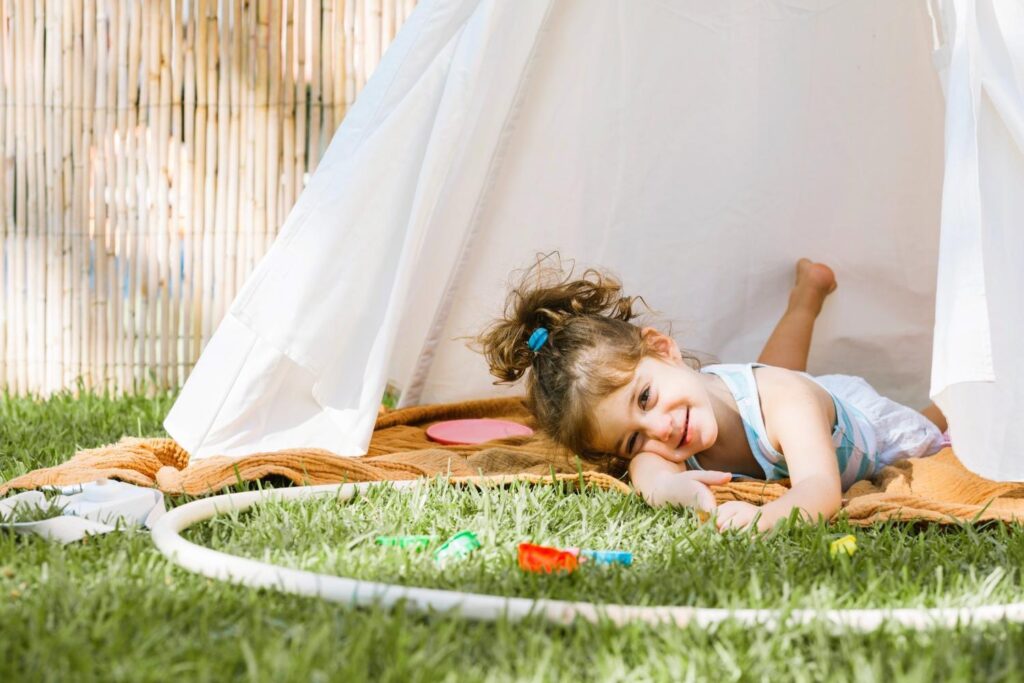
Designing a space for children isn’t as simple as putting up a plastic playground slide and declaring it complete. It’s about designing a space that children really want to visit and use. Consider how children use these spaces; how children develop and mature; and importantly, how to supervise those in the space while not being intrusive. This page provides tips on how to accomplish this without going crazy in the process.
Common Headaches in Backyard Planning
Before you start picking out swing sets, you have to face some common hurdles. Everyone deals with these, so do not feel alone if your yard feels less than perfect.
The Space Crunch
Very few of us live on an estate. You might have a narrow side yard, a slope in your lawn or a patio that covers half the grass. In a cramped space, working out how to squeeze in a sandpit and climbing frame (and possibly a tiny goals) is like trying to put the lid on Tupperware. Crowding the region makes it tough to mow and more difficult for kids to move free of? danger.
Safety First
Safety is the biggest worry for any parent. You have to think about what happens when a kid falls. Hard packed dirt or concrete under a swing is a recipe for a trip to the ER. You also have to consider “pinch points” on equipment and whether that old wooden fence has any nasty splinters waiting for a small hand.
The “Invisible” Kid Problem
Visibility is a huge factor that people often forget. You might think the back corner of the yard is perfect for a playhouse. But if you cannot see that corner from the kitchen window or the deck, you will spend your whole afternoon walking back and forth to check on the noise level.
Growing Pains
Kids change fast. A toddler who loves a tiny plastic slide today will be a bored seven-year-old in the blink of an eye. If you build something too “babyish,” you will be tearing it down in two years. Planning for “evolution” is the only way to make your investment last.
The Boredom Factor
A single swing is fun for ten minutes. To keep kids engaged, you need variety. You need a mix of “active” play like climbing, “creative” play like a mud kitchen, and “quiet” play like a reading nook or a playhouse.
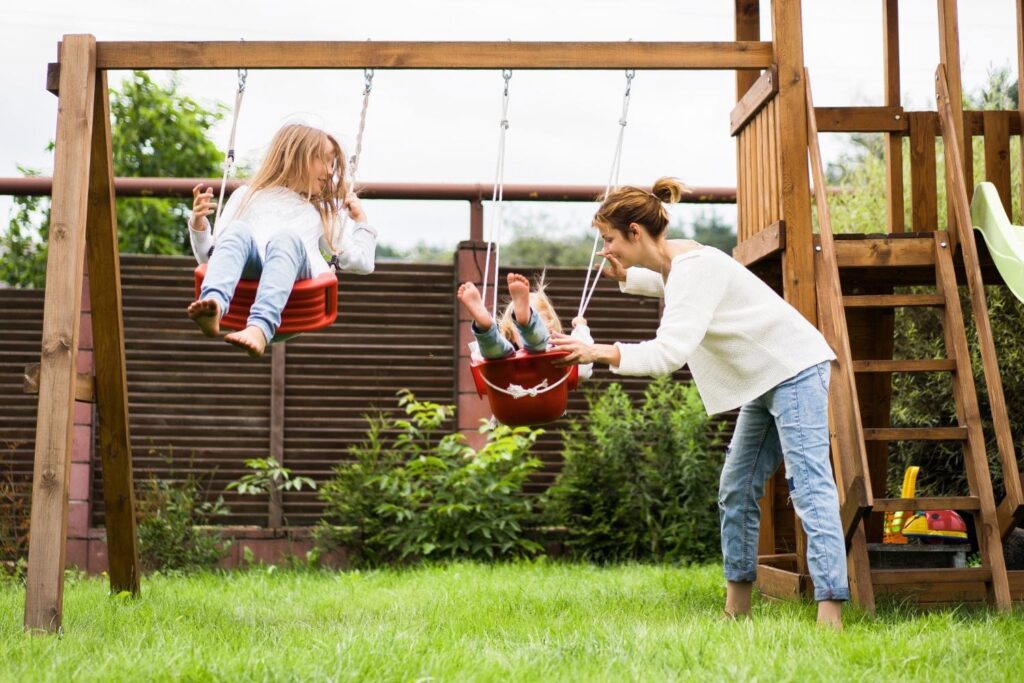
How to Zone Your Garden Like a Pro
To make the playground work, you need to think about “zones.” Don’t just scatter toys everywhere. Instead, look at your garden as a map.
First, find the “active zone.” This is usually the flattest part of the grass where the big equipment goes. It should be away from delicate flower beds or your favorite rose bushes. Next, identify the “quiet zone.” This could be under a shady tree where you put a bench or a small table for drawing and snacks.
Think about the paths. Kids don’t walk; they run. Make sure there is a clear, wide path from the back door to the play area. Avoid putting the playground right next to the grill or the compost bin. You want clear boundaries so the kids know where their “territory” ends and the grown-up space begins.
Designing with GardenBox 3D
You don’t need to be a professional designer to map this out. Using the GardenBox 3D tool makes the whole process much easier. You can test your ideas digitally before you spend a cent on wood or rubber mulch. Here is how to do it step-by-step.
Step 1: Map Your Site
You enter the dimensions of your yard into the software. Involve where the house is located, where the big trees are and if you have any existing garden sheds or barriers around. This provides you with a realistic “canvas” so that you don’t mistakenly purchase a swing set that is two feet too wide for your lawn.
Step 2: Drop in the Fun Stuff
This is the best part. You can drag and drop different elements like slides, sandboxes, and climbing walls. Move them around to see how they fit. This helps you realize that maybe the trampoline shouldn’t be right under the low-hanging oak branch. You can see the scale of the items compared to your actual yard space.
Step 3: Test the Sightlines
The 3D view is a lifesaver here. You can actually “stand” on your virtual deck or look through your virtual kitchen window within the tool. If a big wooden fort blocks your view of the fence line, you can catch that mistake now. Adjust the placement until you have a clear line of sight from wherever you usually sit.
Step 4: Check the “Traffic” and Safety
Look at the routes the kids will take. Is there a straight shot from the slide back to the ladder? Is there enough “fall zone” space around the swings? The tool lets you see the footprint of each item. You need at least six feet of open space around any moving equipment.
Step 5: Plan the Lighting
Don’t forget about the late afternoon. You can use the tool to see where shadows fall. You want the sandbox in a spot that gets some shade so the kids don’t bake in the sun, but you might want the pool or water table in a sunnier patch. You can also plan where to put some solar path lights so the fun can continue as the sun starts to go down.
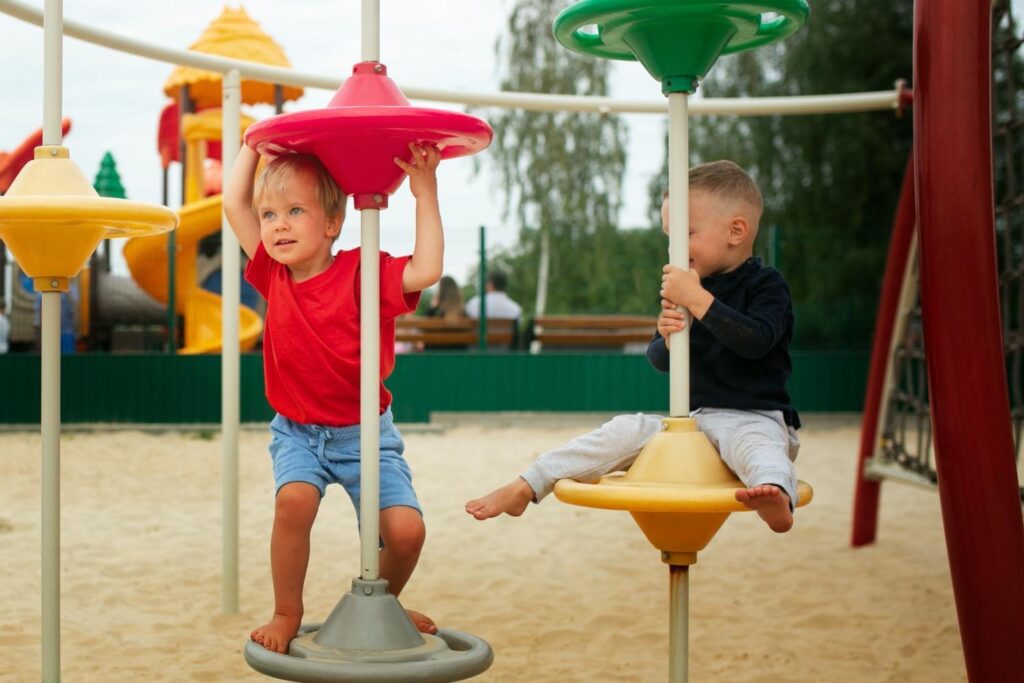
Making it All Come Together
Once you have your plan in the 3D tool, the rest is just execution. Start with the ground cover. Bark chips, rubber mulch, or even specialized pea gravel are great options for under the big toys. They soak up the impact of jumps and tumbles much better than grass does.
Plant some greenery that can withstand a little rough play. Avoid anything with thorns or toxic berries. Robust shrubs such as boxwood or tall ornamental grasses may serve as “walls” for a secret hideout without being delicate.
Basically, a backyard playground is about giving your family a spot to make memories together in a relaxed way. It really doesn’t have to be an extravagant amusement park. A slide here, a sandbox there and a bit of running space will do the trick. If you take the time to plan it, not only will your backyard continue to be a nice place for the grownups, but kids will also find it quite enchanting. Get your computer, fire up the planner and start experimenting with the layout of the swings. The future you —probably the one relaxing on the porch with a refreshing drink, while the kids are happily playing in the background — will be very grateful to you for this.




Leave a Reply