
 Author:
Sometimes the simplest learning activities are the ones you come back to again and again. These free printable copywork worksheets give kids a little focused writing practice without needing a complicated lesson or a pile of supplies. Just print a page, grab a pencil, and start wherever your child feels comfortable.
Our first pack begins with easy words and gradually moves through short phrases, sentences, and paragraphs. There’s also a separate pack for older students, with longer Bible passages, historic speeches, and poetry suitable for middle school and high school copywork.
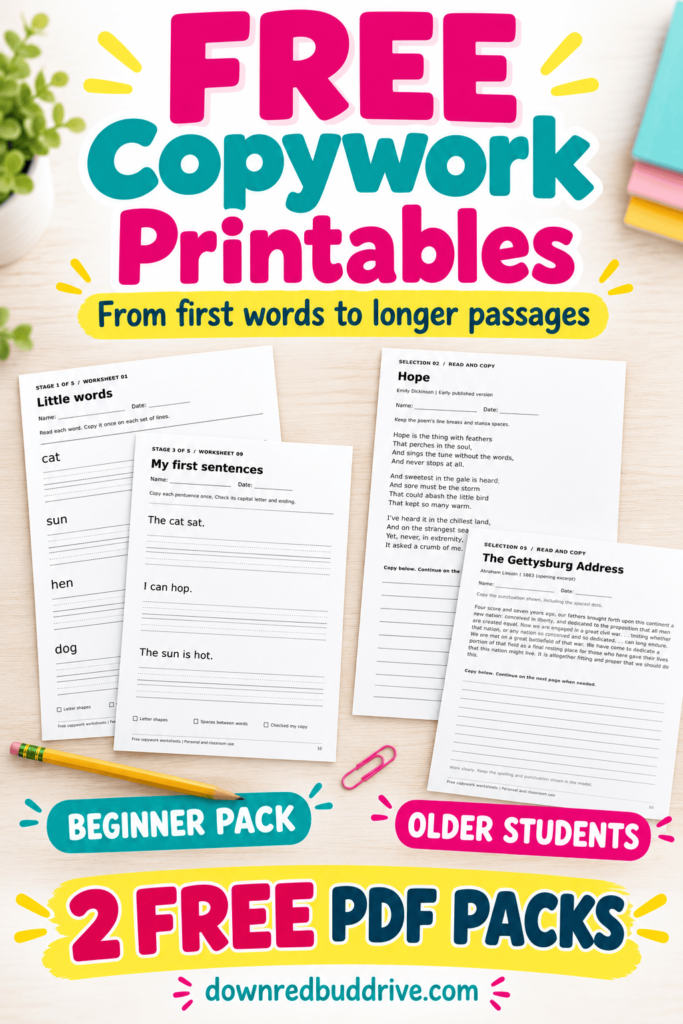
Whether you’re helping new writers leave spaces between their words or giving a teenager something thoughtful to copy, there’s room to take this at your own pace.
What Is Copywork?
Copywork is exactly what it sounds like: reading a word, sentence, or passage and carefully copying it. Children keep the model in front of them, looking back whenever they need to check a spelling or see which punctuation mark comes next.
It’s a great way to practice handwriting while noticing how written language works. Rather than thinking up a story and writing it down at the same time, kids can concentrate on letter formation, spacing, capital letters, and punctuation.
The goal isn’t to finish as quickly as possible. It’s to slow down, pay close attention, and produce a small piece of careful work.
What’s Included in the Beginner Copywork Pack?
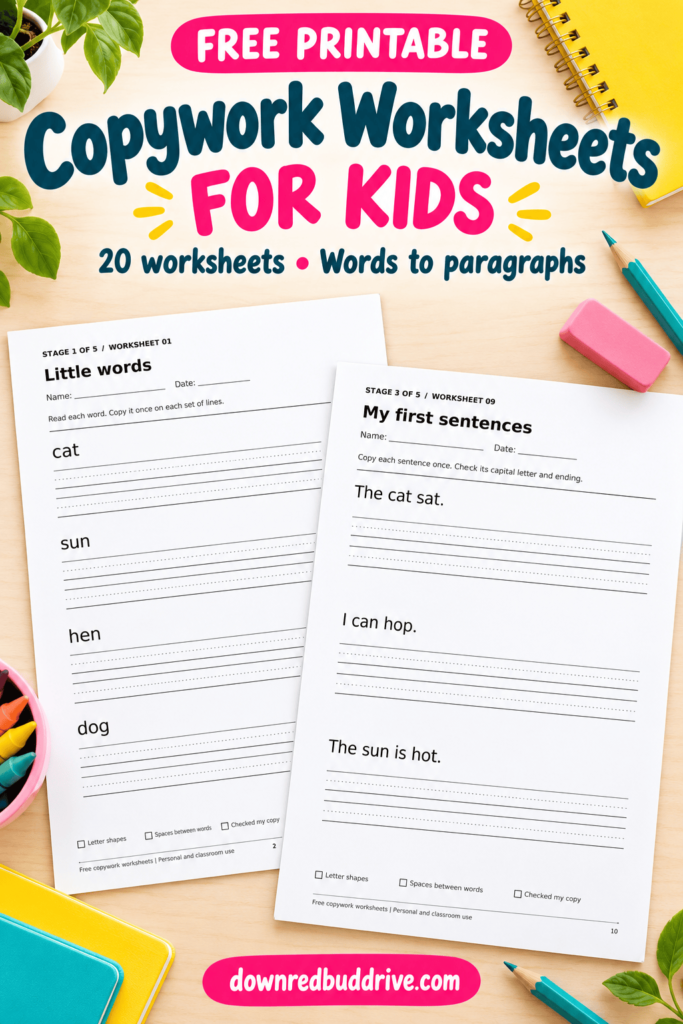
The first PDF includes 20 copywork pages plus a parent guide. The worksheets are arranged in five stages, so children can build up gradually instead of jumping straight into a full paragraph.
The pages are black and white for easy printing, with space for a name and date and simple checkboxes to encourage children to look over their work.
Simple Words
The first four copywork sheets start with familiar words such as “cat,” “sun,” and “dog,” then move toward longer words like “rabbit” and “garden.”
These pages have wide handwriting guides, including a dotted middle line, and space to copy each word twice. They’re a gentle starting point for children who are ready to write words but still need practice forming their letters.
Short Phrases
Next come short phrases such as “a red hat,” “read a book,” and “the golden sunset.”
This stage gives children a chance to practice moving between words and leaving clear spaces. The phrases are still short enough to feel manageable, with the same generous handwriting guides.
Complete Sentences
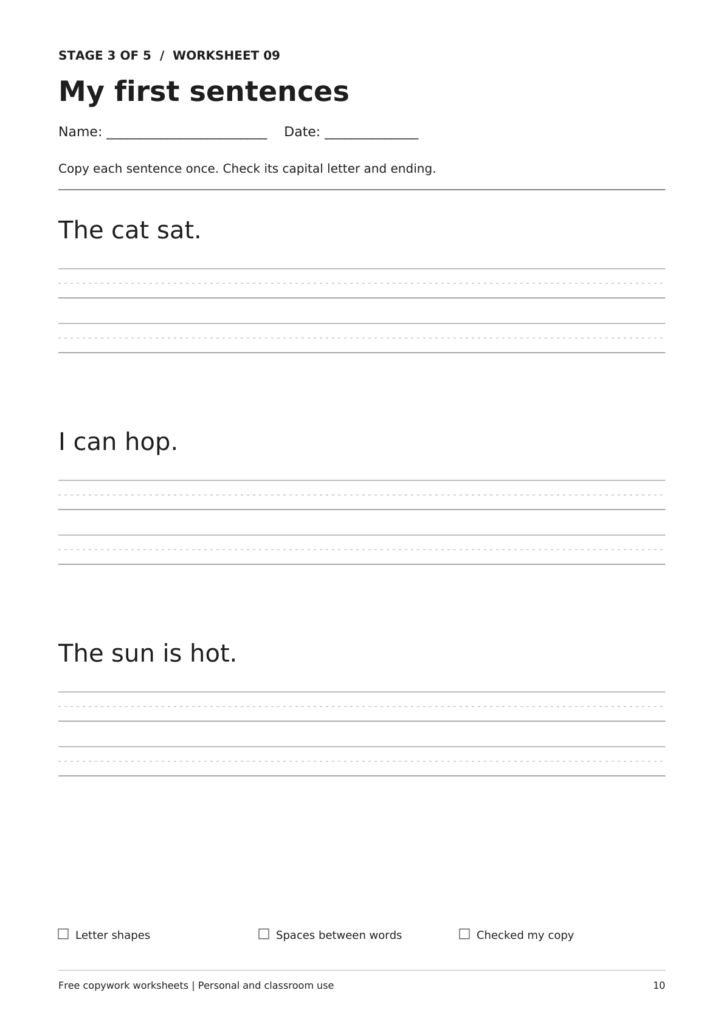
The sentence pages begin with examples such as “The cat sat.” before introducing more detail, questions, and exclamations.
Children can start noticing how a sentence begins with a capital letter and how its ending changes. A question mark does a different job from an exclamation mark, and copying both gives you an easy opportunity to talk about that.
Connected Sentences
Once children feel comfortable copying individual sentences, they can try two connected sentences at a time.
These pages include everyday topics such as a walk in the park, preparing food, and helping someone. They also introduce punctuation details such as commas and apostrophes.
Short Paragraphs
The final four worksheets feature short passages about growing a seed, finding a hidden stream, welcoming another child into a game, and investigating a garden mystery.
There’s more to keep track of here, but children can still copy one sentence at a time. They don’t need to memorize the passage or finish the entire page in one sitting.
Copywork Pages for Middle School and High School
Copywork doesn’t have to stop once children can write a neat sentence. Older students can use longer passages to practice fluent handwriting while examining vocabulary, sentence structure, imagery, and punctuation.
Our separate advanced pack includes eight selections, each with a model page, a lined continuation page, and a short discussion prompt. There are 17 pages altogether, including the introductory guide.
The selections include Psalm 23, 1 Corinthians 13:4–8, and Ecclesiastes 3:1–8 from the World English Bible. These longer Bible passages give students more to work with than individual Bible verses and offer opportunities to discuss ideas such as patience, kindness, comfort, and changing seasons.
The pack also includes excerpts from Abraham Lincoln’s Gettysburg Address and First Inaugural Address, an excerpt from the Declaration of Independence, Emily Dickinson’s poem about hope, and the opening three stanzas of Henry Wadsworth Longfellow’s “A Psalm of Life.”
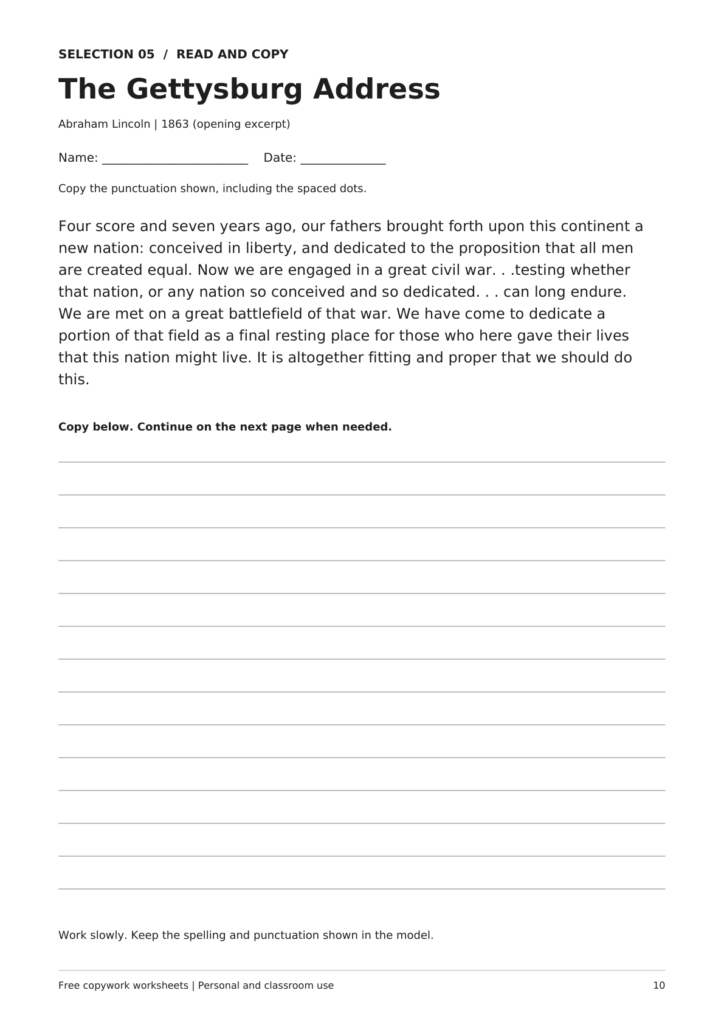
Families who prefer secular copywork can simply print the speech, history, and poetry pages.
If your teenager enjoys studying speeches, a Winston Churchill speech could be another text to explore alongside this kind of activity. The downloadable pack uses the selections listed above rather than a Churchill speech.
Using Copywork Across Different Subject Areas
One useful thing about copywork is how easily it can connect with other subject areas.
A historic speech can sit alongside social studies, giving students a reason to investigate who was speaking, what was happening, and why those words mattered. Poetry can lead to conversations about rhythm, imagery, or the way a writer creates a particular feeling.
Bible passages can support faith-based learning and discussions about character traits. Even the beginner pack offers little opportunities to talk about kindness, curiosity, and helping others.
You can also extend the activity with texts your child already enjoys. Nursery rhymes, a favorite poem, or a sentence from a book you’re reading together can make a useful next step beyond the printable pages.
How to Use These Copywork Worksheets
Start with a page that feels comfortably achievable. The beginner pack will suit many children around ages 5 to 11 and beyond, depending on their reading and handwriting confidence. The advanced pack is designed with middle and high school students in mind.
Read the model together before your child begins. Explain any unfamiliar words, then let them copy a little at a time. Five to ten minutes can be plenty, especially for younger children.
When they finish, encourage them to compare their writing with the original. Did they leave spaces? Remember the capital letters? Include the punctuation? Keep the check gentle and specific.
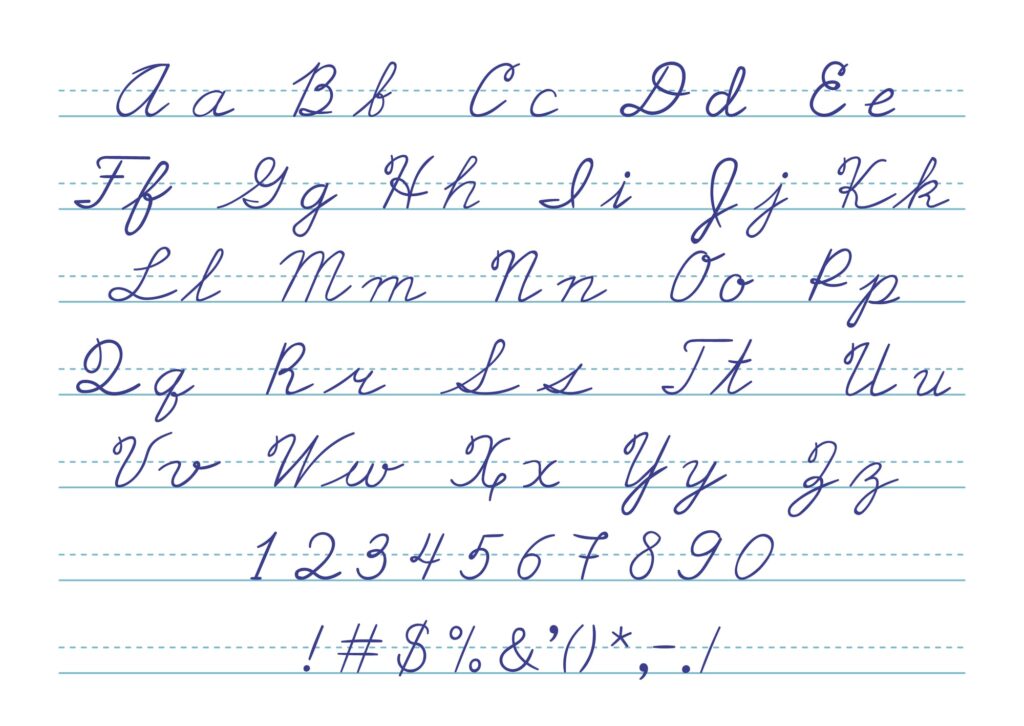
There’s no need to work through every worksheet in order. Repeat a page, skip ahead, or spread a longer passage over several days. Older students can use print or cursive, depending on what they’re practicing.
Download PDF
Choose the beginner copywork pack for 20 worksheets that progress from simple words to short paragraphs.
Choose the middle and high school pack for eight longer selections featuring Bible readings, historic speeches, and poetry, with continuation pages for extra writing space.
Both PDFs are designed for A4 paper. If you’re printing on US Letter, select “Fit” in your printer settings.
These printable worksheets are for personal and classroom use only. If you’d like to share them with another family or teacher, please send them to this blog post so they can download their own copies.
More Homeschool Resources
- Free Printable Spelling Bee Certificates for Kids
- 16 Bible Verses to Memorize (Free Printable!)
- Noah’s Ark Craft With Free Printable Spinner Wheel
Save These Worksheets for Later
If these free copywork worksheets would be useful for your homeschool or classroom, pin this post so you can find it again when you need a quick writing activity. You can also share the post with a friend who’s looking for handwriting practice that grows with their child, from those first little words to thoughtful passages for older students.




Leave a Reply