
 Author:
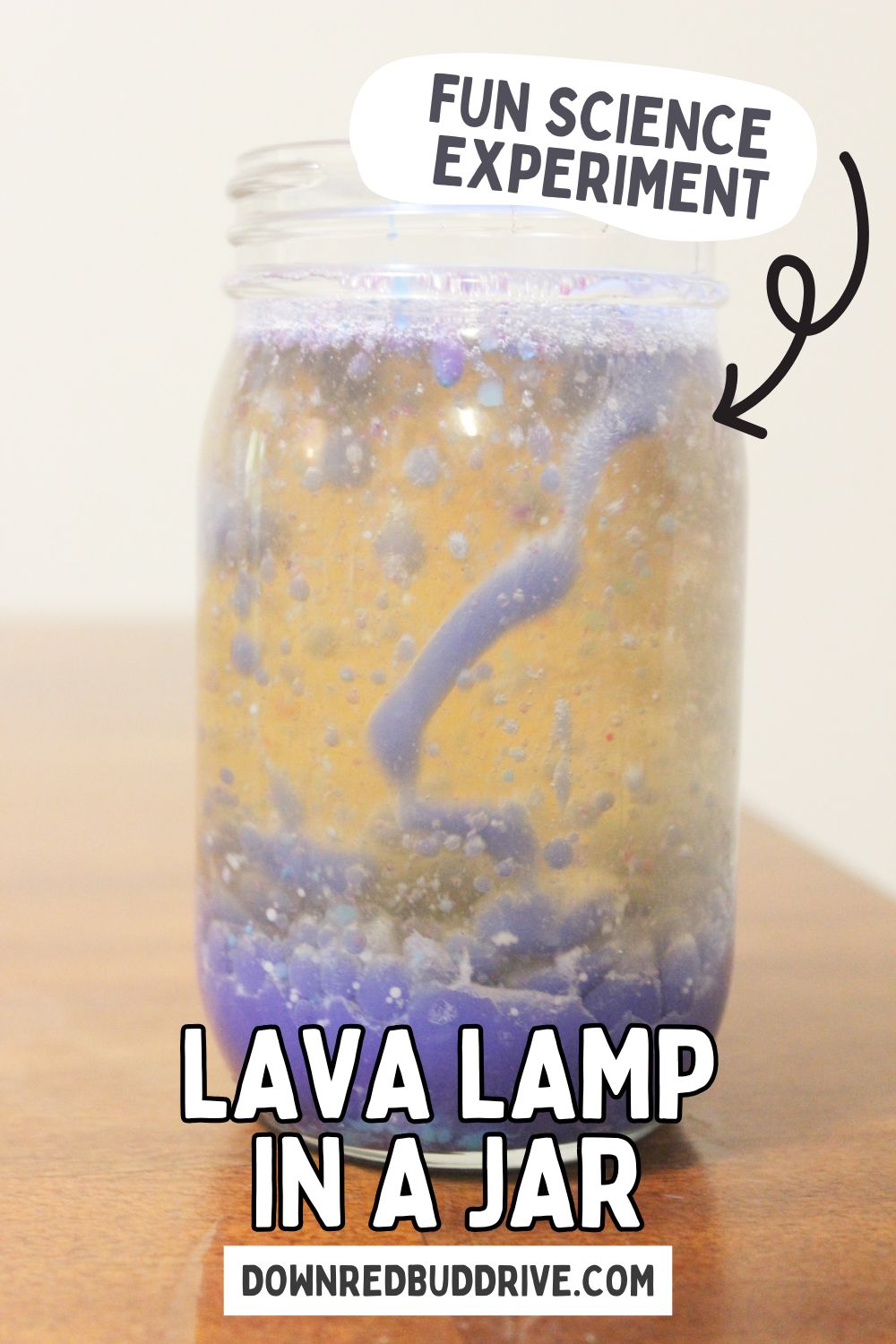
 If you are looking for a fun and simple science activity to try with the kids, this DIY lava lamp in a bottle is always a hit. It is colorful, fascinating to watch, and surprisingly easy to make using everyday household supplies. Kids love seeing the blobs move up and down in the jar like a real lava lamp, and it turns into a great opportunity to talk about simple science concepts too.
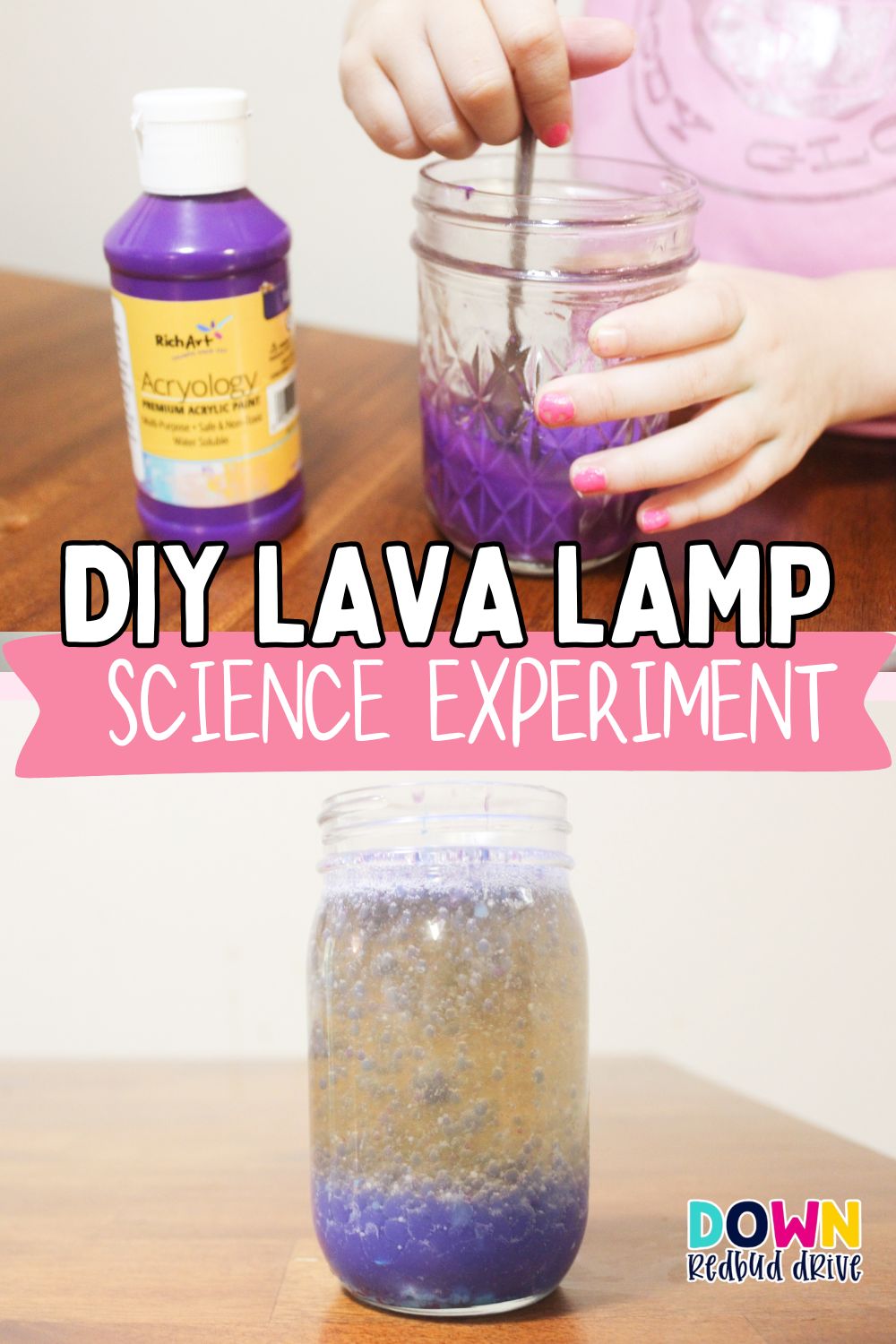
This classic lava lamp in a bottle experiment is perfect for toddlers, preschoolers, and elementary school kids. It works well for homeschool science lessons, science fair demonstrations, or just a fun afternoon experiment at home. The bubbling motion is mesmerizing and makes kids curious about what is happening inside the bottle.
You can make this activity using either a jar or a water bottle, and it only takes a few minutes to set up.
Supplies for the Lava Lamp Experiment
To make your homemade lava lamp, you only need a few simple supplies. Most families already have these items in the kitchen, which makes this experiment an easy choice when you want a quick science activity.
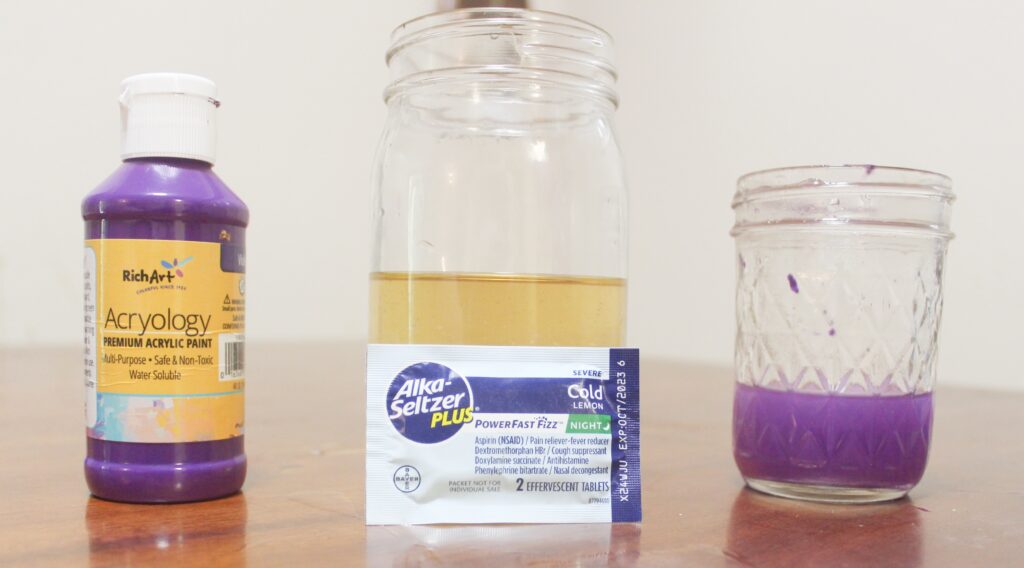
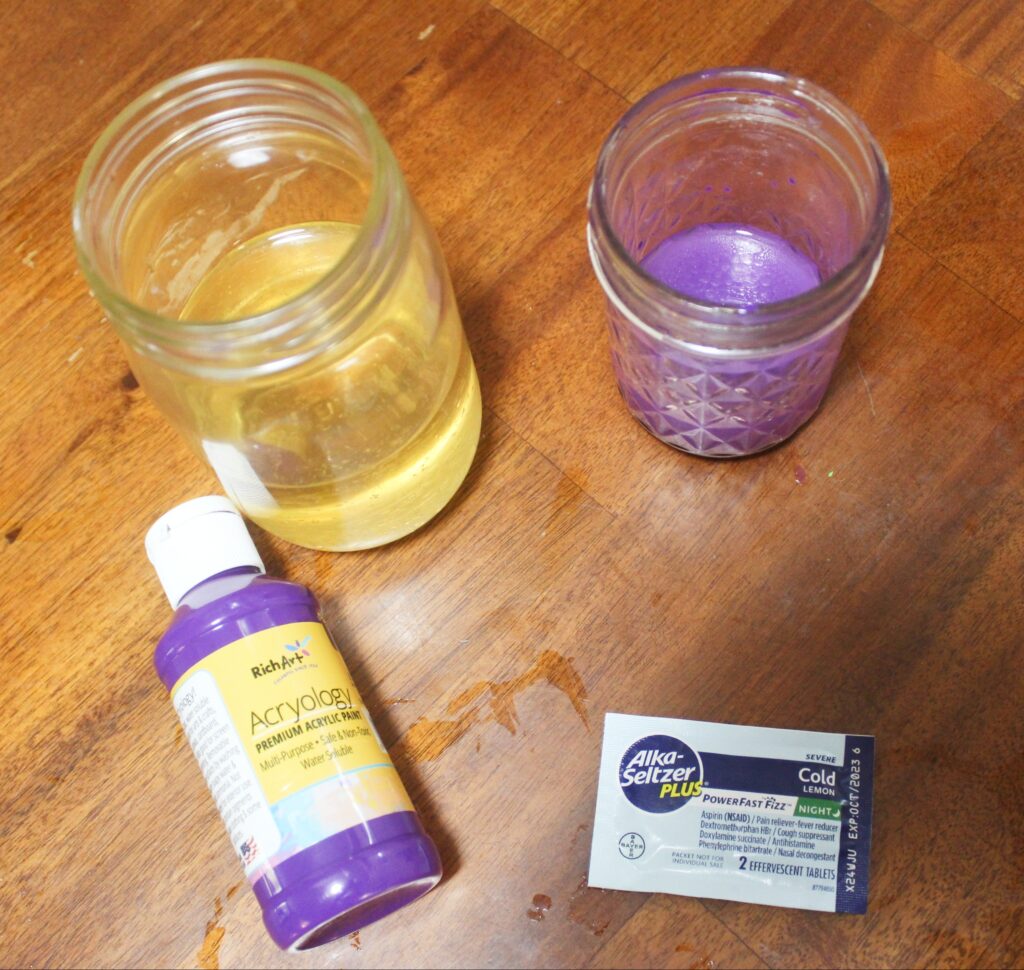
For this lava lamp in a bottle for kids you will need a glass jar or water bottle, water, paint or food coloring, oil, and Alka Seltzer tablets. The oil creates the classic oil and water lava lamp effect, while the Alka Seltzer tablet triggers the bubbly reaction that makes the colorful blobs move around the bottle.
You can experiment with different types of oil such as coconut oil, vegetable oil, or baby oil. Coconut oil has a slight yellow tint, while baby oil is clearer and can make the colors stand out even more.
I’ve linked the supplies below on Amazon to make it easy if you need to stock up on anything.
- Glass jar
- Water
- Paint
- Oil
- Alka Seltzer
How to Make a Lava Lamp in a Bottle
This lava lamp in a bottle easy experiment comes together in just a few simple steps. Kids will enjoy watching each stage as the bottle fills with colorful bubbles.
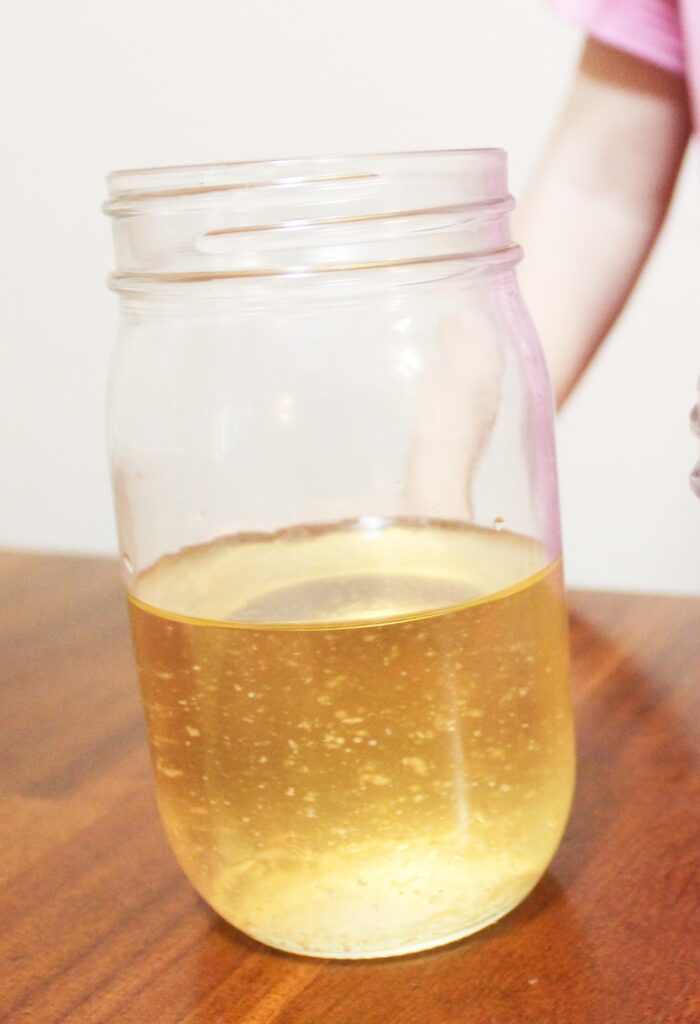
Start by filling your jar or bottle about halfway with coconut oil. You can also use vegetable oil if that is what you have available. Leave some space at the top of the bottle so the bubbling reaction has room to move.
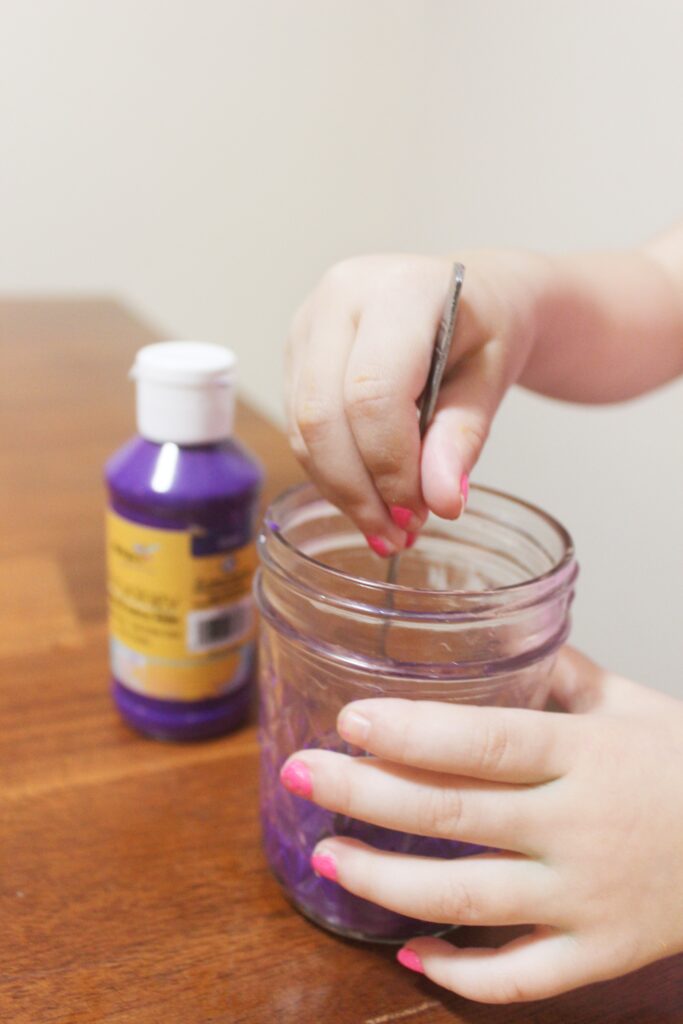
Next, mix a few teaspoons of paint with about one quarter cup of water. If you are using a standard 16 ounce jar or water bottle, this amount works well to create bright colorful blobs. You can choose any color you like.
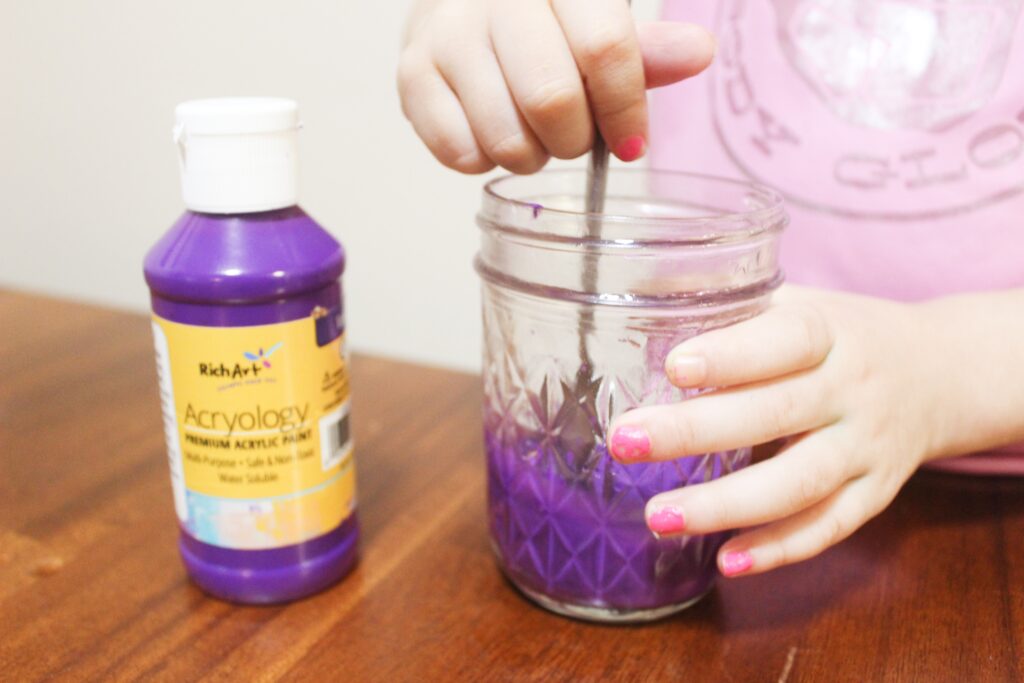
Blue and purple look especially fun together. Mix it all up
Pour the paint and water mixture into the jar. The paint mixture will sink to the bottom because oil and water do not mix. This is part of the science behind the experiment.
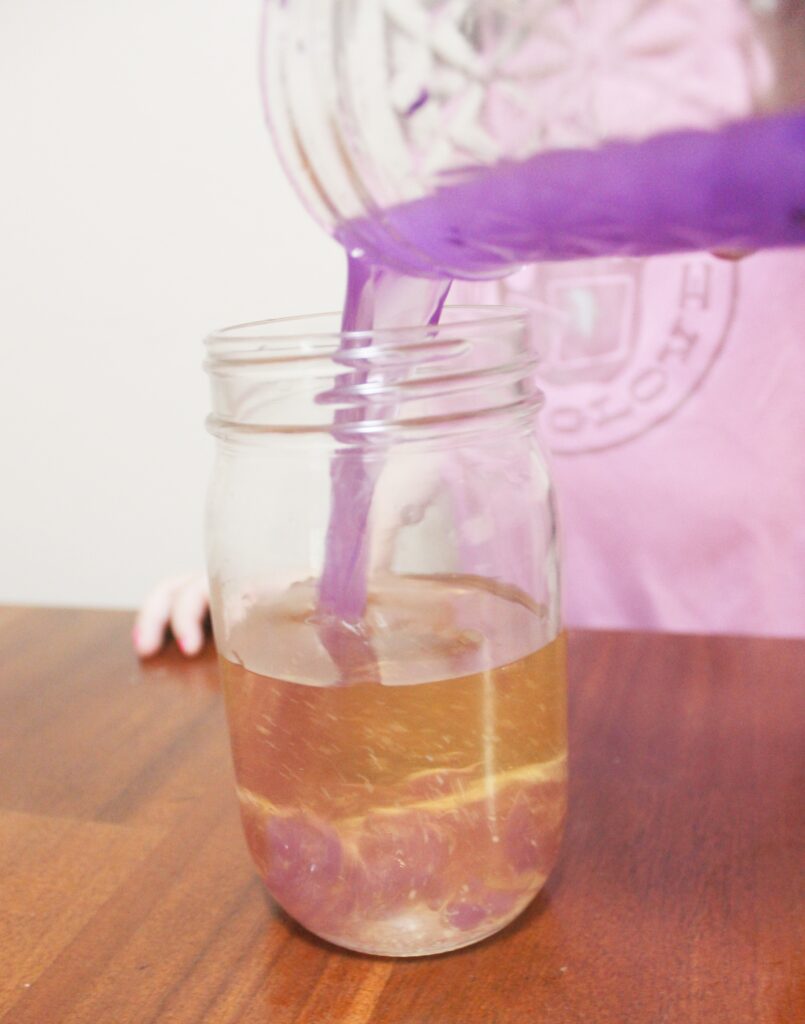
This is also fun to watch.
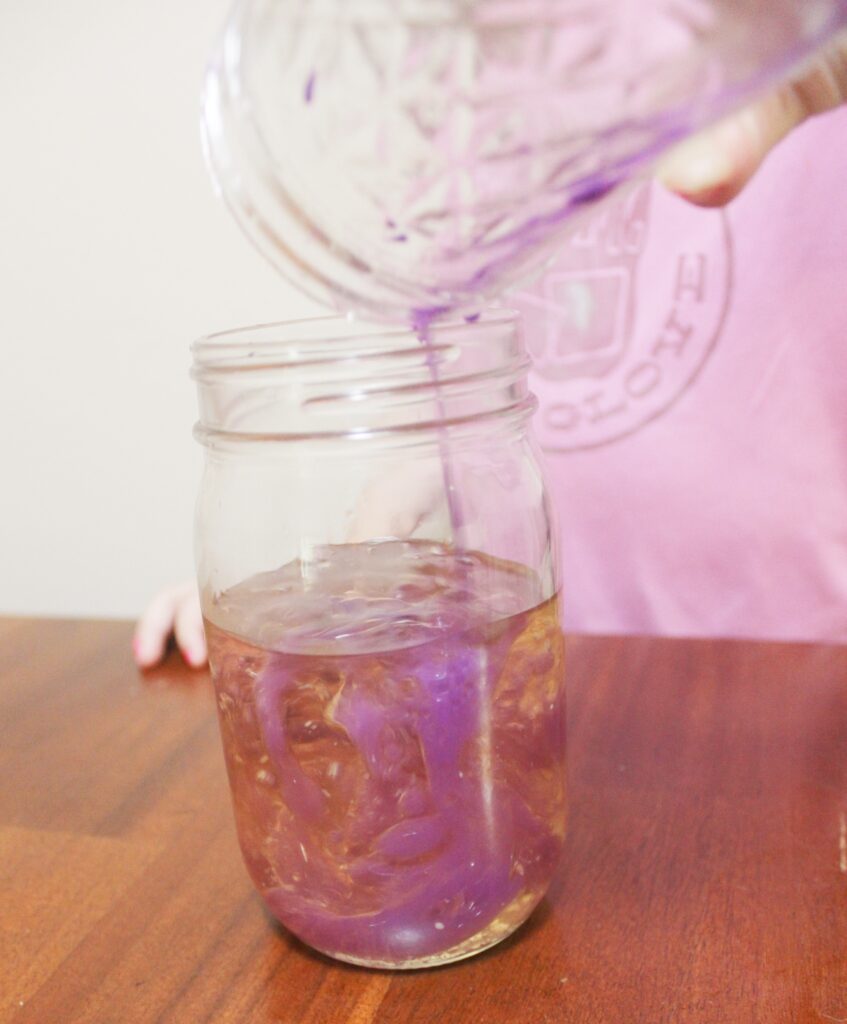
Give the jar a moment so the paint settles at the bottom and the oil floats on top.
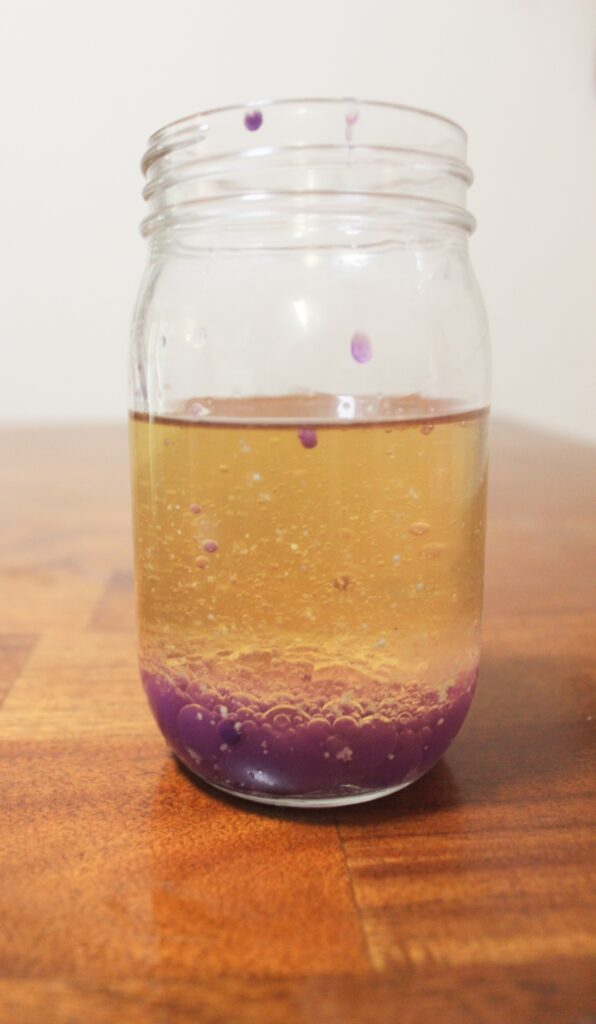
Now comes the exciting part. Drop an Alka Seltzer tablet into the jar and wait a few seconds.
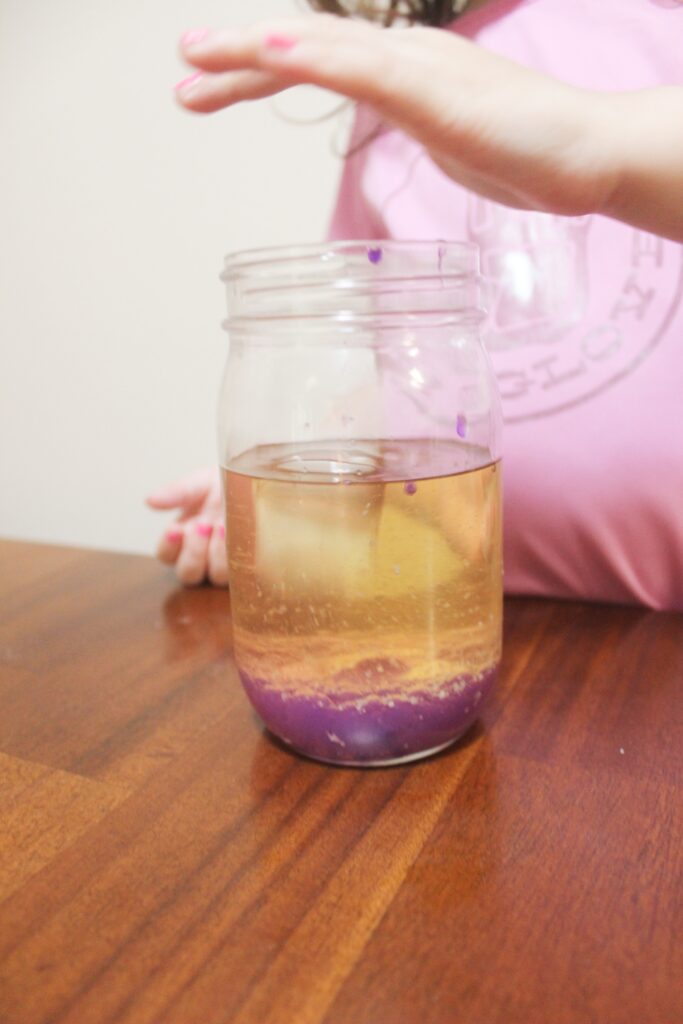
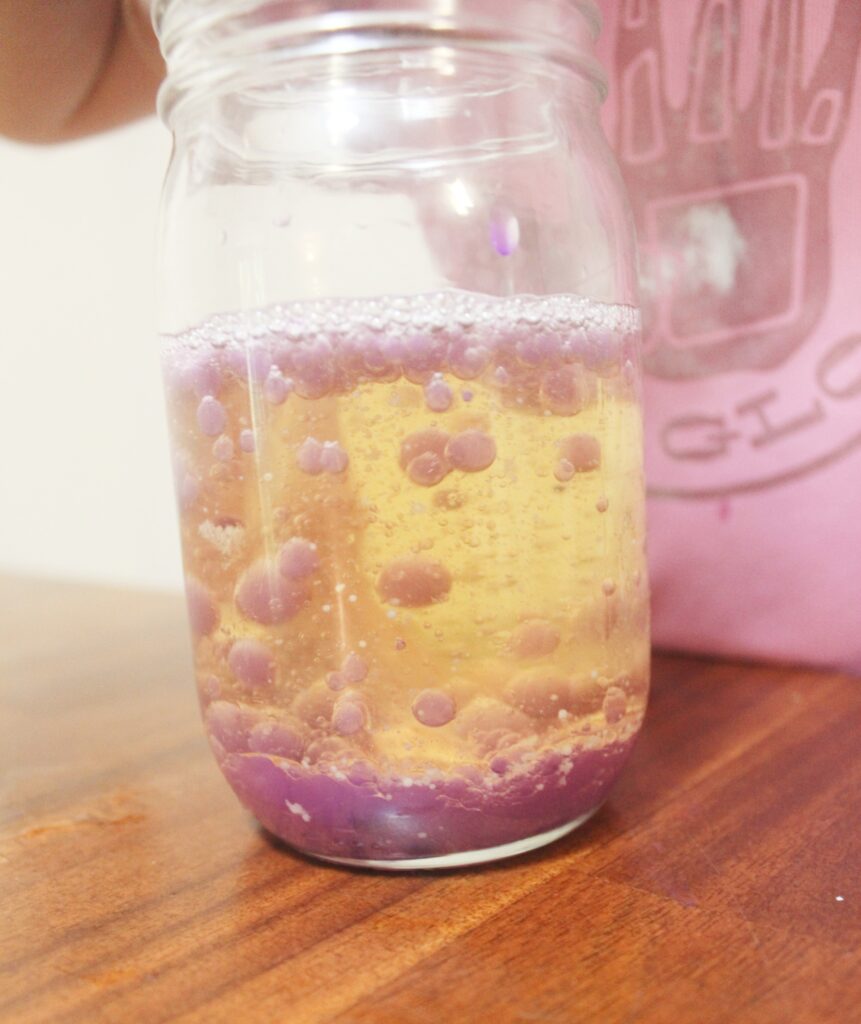
As the tablet begins to dissolve, bubbles form and push the colored paint up through the oil. The blobs float and bounce up and down in the bottle, creating the classic lava lamp effect. It looks just like a real lava lamp moving slowly inside the jar.
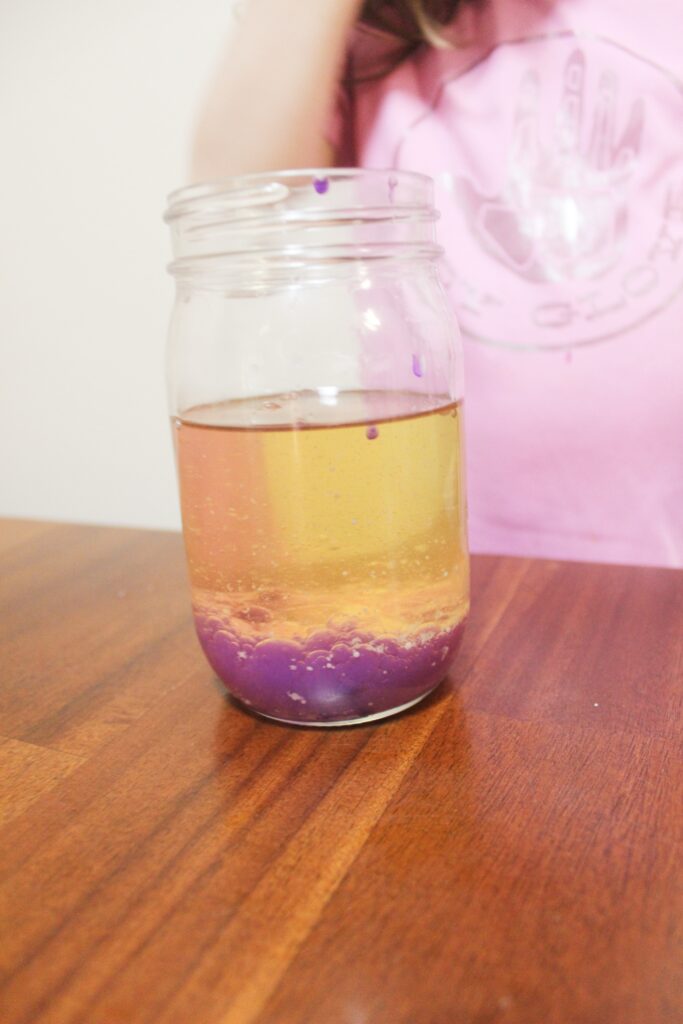
Once the Alka Seltzer tablet finishes dissolving, the motion will stop. The great thing is you can simply drop another tablet into the jar and watch the lava lamp come to life again.
The Science Behind the Lava Lamp
This activity is a great introduction to basic science concepts for young children. The lava lamp experiment explanation is actually based on two simple ideas: density and chemical reactions.
Oil and water do not mix because they have different densities. The water and paint mixture sinks to the bottom of the bottle while the oil floats on top. When the Alka Seltzer tablet dissolves in the water, it releases carbon dioxide gas. These bubbles attach to the colored water blobs and push them upward through the oil.
When the bubbles reach the top and pop, the colored water sinks back down again, creating the repeating lava lamp motion.
This oil and water in a bottle experiment is often used in classrooms and science fairs because it clearly demonstrates how density and gas reactions work.
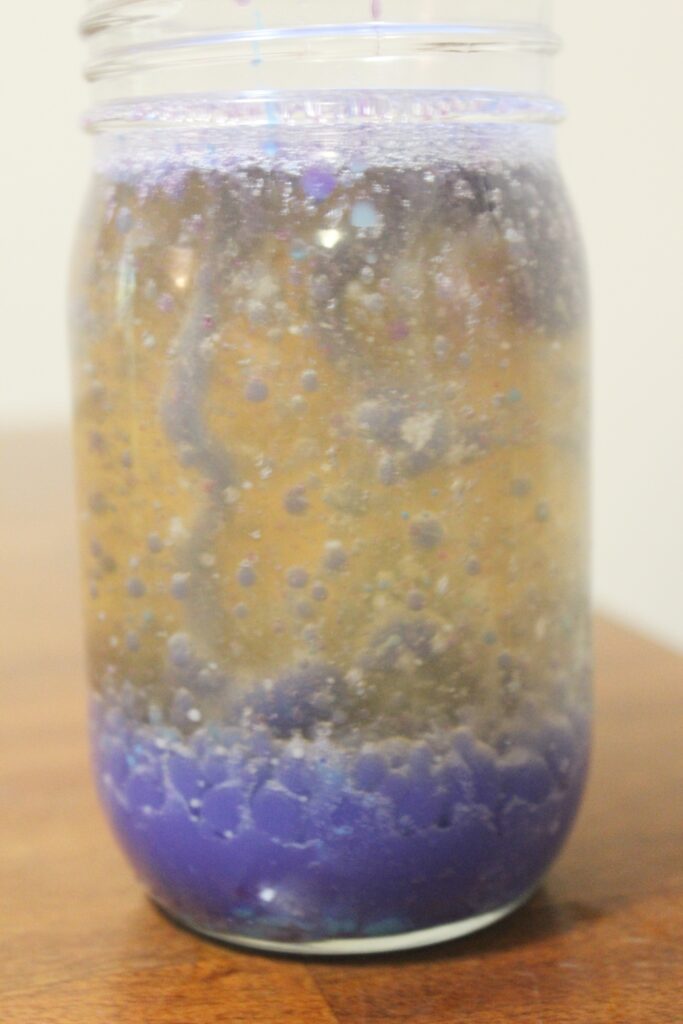
DIY Lava Lamp Variations to Try
Once kids see how fun this experiment is, they often want to try it again with different variations.
You can experiment with different paint colors or food coloring to make unique lava lamps each time. If you want clearer blobs, try using baby oil instead of coconut oil.
Some people also experiment with lava lamp in a bottle with vinegar or lava lamp in a bottle with baking soda. These combinations create similar bubbling reactions using different ingredients.
You might also see ideas online for a lava lamp water bottle no Alka Seltzer version, but the classic Alka Seltzer tablet method tends to create the most dramatic bubbling effect.
If you are using a smaller bottle, simply reduce the amount of water and paint mixture so there is still room at the top for the bubbling reaction.
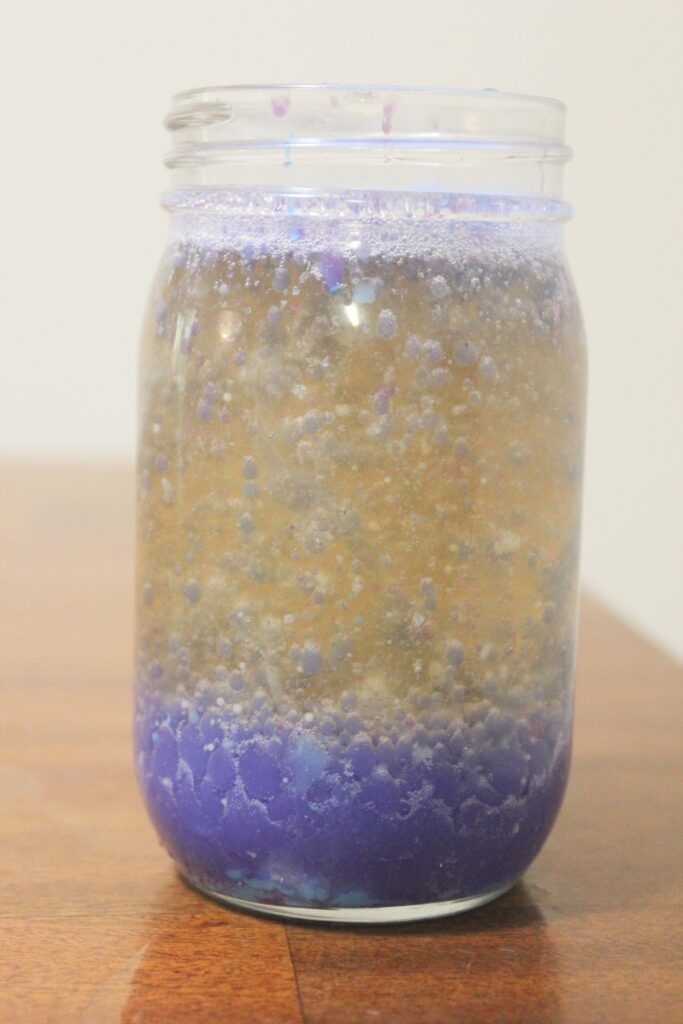
A Classic Science Activity for Kids
This lava lamp in a bottle science project has been a favorite classroom and homeschool activity for years. It is simple enough for younger children to enjoy, but still interesting enough for older kids to explore the science behind it.
Whether you are doing this for a homeschool lesson, a school science project, or just a fun weekend activity, the colorful blobs in a bottle are always exciting to watch.
Best of all, once the bubbles stop you can simply drop in another seltzer tablet and start the experiment all over again.
More Fun Learning Activities for Kids
Hands-on activities are one of the best ways to help children explore science, creativity, and problem-solving while having fun. From simple science experiments to sensory play and craft projects, these kinds of activities make learning exciting and memorable for kids of all ages. Try a few different ideas and see which ones your kids enjoy the most.

- Spring & Summer Scavenger Hunt for Kids
- Fall-Themed Telling Time Worksheets
- Printable Robot Preschool Activity Book
- Must-Try Science Experiments for Kids
If you enjoyed this DIY lava lamp experiment, please share this blog post with friends, family, or other parents who love fun learning activities for kids. Sharing helps more families discover easy experiments they can try at home.
Leave a Reply